
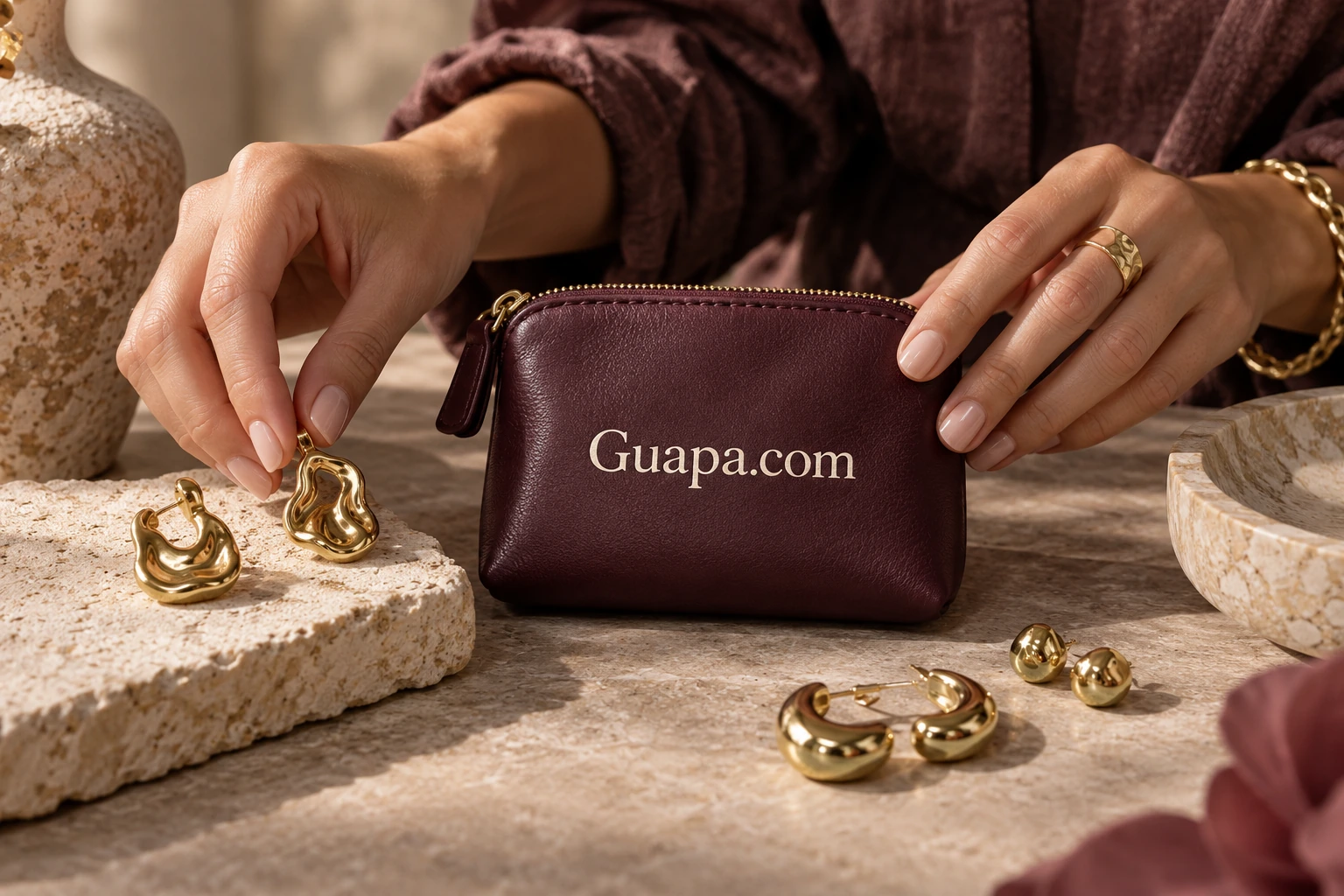
Guapa.com could stamp an accessories label: bags, jewelry, scarves, or soft goods that wear a short Spanish dictionary mark as the house name. This illustrative concept starts with a small product line and a defined customer. Domain acquisition does not include stock or an operating label.
Accessories brands live on hangtags, unboxing photos, wholesale line sheets, and the word a buyer writes in a lookbook. A small tag leaves limited room for lettering. Test the actual wordmark at that size, alongside the materials and care information a customer needs. The collection still has to earn repeat orders through its construction and delivery.
Illustrative first collection
Illustrative example: a first drop of three leather card cases and one compact crossbody, photographed on linen, sold DTC with a simple size chart and materials note. Wholesale pitch: “Guapa: small leather goods for gift and travel.” Set price points from your cost sheet, including materials, packaging, shipping, and returns. The domain matches the stamp on every piece.
Why accessories before apparel? Small goods teach quality control, packaging, and returns without the size-run complexity of clothing. A four-SKU drop is enough to test photography, shipping damage rates, and which piece gets gifted most. Expanding into scarves or jewelry later keeps the house name stable while the assortment changes.
Audience choice should be narrower than “fashion lovers.” Examples that can guide merchandising: gift shoppers buying for travel, everyday-carry customers who want one compact bag, or jewelry buyers who prefer short marks on clasps and cards. Each audience changes photography, wholesale doors, and the sentence on the hangtag.
Buyer job and differentiation
The buyer for this Idea is a founder choosing a first collection and audience rather than launching twenty categories at once. Guapa is a candidate to test on a small tag and in a spoken introduction at a counter. A short explanation of the name can sit beside the collection story, while materials, construction, and intended use provide the details a buyer needs.
Differentiation that stays believable:
- One hero material story (vegetable-tanned leather, recycled metal, deadstock fabric), not a vague “luxury” claim.
- One use case the photos prove (travel, gift, everyday carry).
- One packaging ritual you can repeat (tissue, card, care note) without theater that kills margin.
- Honest scale in photos: a card case should look like a card case, not a billboard mockup.
Print the mark on a sample hangtag and line sheet before committing to packaging. Ask a shop buyer to locate the item code, dimensions, material, minimum order, and reorder date. If those facts are difficult to find, change the sheet before spending more on the campaign photographs.
Test a small set of distribution channels
Honest early channels:
- Own site at Guapa.com with materials, dimensions, and shipping regions above the fold.
- A few pop-ups or trunk shows where you watch people handle the goods.
- Selective wholesale with a one-page line sheet: SKUs, wholesale/MAP notes you can actually keep, reorder lead times.
- Creator seeding with disclosed gifting. Ask for honest use photos, not scripted “best ever” claims.
Avoid claiming sell-through you have not earned. Avoid “as seen in” logos you did not earn. Wholesale buyers notice when a line sheet promises replenishment you cannot deliver. DTC buyers notice when the unboxing photo does not match the object that arrives.
International shipping can wait until domestic returns are under control. A bilingual care card can be a real differentiator for this mark if your audience spans English and Spanish. Print clear care instructions that match the material.
What you still have to build
Sourcing, quality control, inventory, and returns are the business. A name provides a consistent label for those activities. Practical ninety-day build list (illustrative):
- Lock four SKUs max; kill anything that does not share packaging format.
- Photograph real samples in daylight; keep one consistent surface for the first drop.
- Write materials and care copy a store associate could read aloud.
- Set a return window and a damaged-in-transit path before the first order.
- Print hangtags with Guapa.com complete: no clipped TLD, no tiny illegible URL.
If you need a brand site for the first collection, that is separate website work. Acquiring Guapa.com is for operators who want this exact stamp and address on the goods.
Risks and comparisons
Accessories markets are crowded with short Romance-language marks. Operational clearance still matters: handles, marketplaces, and trademarks are not solved by an illustrative business concept. A name that feels warm in a gift context may feel wrong for technical outdoor gear. Match the register to the goods.
Compare this path with a full beauty product brand or a salon. Accessories are object- and wholesale-sensitive. Beauty products add formula and labeling load. Salons add appointments and local maps. Inquire with the collection outline that matches the life you want to run.
Next step
Request acquisition details for Guapa.com with your first collection outline, materials story, and intended audience.
Inquire about Guapa.com