
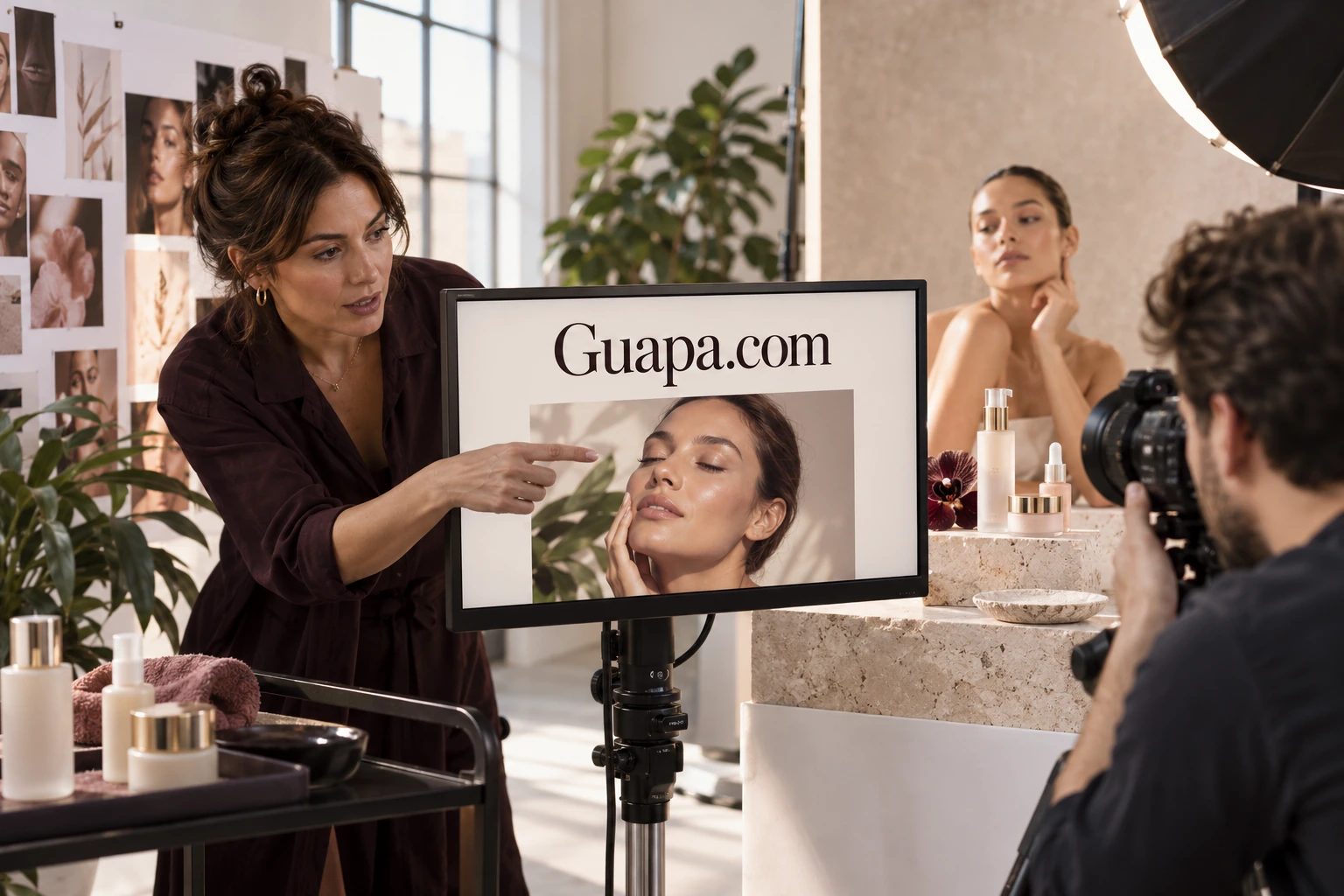
Guapa.com could host a Spanish-language beauty publication: an editorial room covering beauty and style for bilingual readers. This illustrative concept depends on useful reporting and a consistent publishing schedule. Domain acquisition does not include a magazine or an established audience.
Editorial brands live on trust. The name can open the door; sponsorship and affiliate revenue only work when disclosure is clear and the audience is real. Treat sponsored placements as labeled, editorially controlled, and removable if the site later transfers, never as pageviews sold on domain-authority folklore alone.
Illustrative editorial offer
Illustrative example: a weekly Spanish-language newsletter on drugstore finds and salon routines for U.S. LatAm readers, with a Guapa.com archive of longform guides. Year-one revenue hypothesis (labeled as such): newsletter sponsorships and a small affiliate set for tools the editors actually use. Base sponsorship pricing on measured readership once publishing begins. Compare this path with a product launch before you inquire. Editorial and DTC pull different operators and different weekly calendars.
Spanish as a first language of the room matters. Translation-afterthought sites feel hollow to readers who can tell when captions were run through a tool and parked under an English CMS. Guapa as masthead signals appearance and care; the archive has to deliver useful routines, ingredient explainers with sources, and cultural context that is not stereotype filler.
Choose a manageable editorial beat. Pick a beat you can keep: haircare routines, drugstore skin, salon culture, or beauty business notes for founders. A promise to cover “all beauty everywhere” can stretch a small team beyond the reporting it can sustain. A weekly newsletter plus two longer guides a month is one schedule a small team could test before expanding.
Buyer, fit, and masthead logic
The buyer is a publisher or founder who wants a content-led identity in beauty and style, with Spanish (or bilingual Spanish/English) as a primary publishing language. Guapa fits the masthead because readers already associate the word with appearance in ordinary speech. The first offer is a defined beat and a publishing cadence you can keep when life gets busy, with a pilot issue that shows readers what to expect.
Fit checks before you fall in love with a logo animation:
- Can you name ten story titles for the next quarter without repeating the same tip?
- Do you have sources for ingredient or procedure claims, or will posts stay in opinion/routine territory?
- Who is the reader in one sentence, including language mix and shopping context?
- What will you refuse to take sponsorship money for?
- If the site sells later, can sponsorships be unwound cleanly?
Reach readers and test a revenue model
Distribution that matches a young editorial room:
- Newsletter as the home base: an owned relationship, not only rented social reach.
- Short social clips that point back to guides, with captions written for the language you claim.
- Creator partnerships under disclosure rules; co-byline carefully when trust is shared.
- Occasional events or live sessions only when the calendar can absorb them.
- Search for evergreen guides that are useful, not promised rankings.
Revenue hypotheses should stay labeled. Newsletter sponsorships need a rate card you can defend with real send volume once you have it, based on recorded circulation. Affiliates need products editors actually use and disclose. Display ads can wait until page templates and privacy notices match what you collect. Material claims about ingredients or procedures need authoritative sources; ordinary brand opinion stays labeled as such.
Do not promise sponsorship results based on a domain metric. Buyers of sponsorships increasingly ask for newsletter open rates, click maps, and refund policies for missed inserts. Build the ledger before the logos.
Editorial operations
Build an editorial calendar, a conflict policy, and a sponsorship ledger before chasing brands. Practical starter kit:
- Style guide: language mix, product-name casing, how you handle unproven claims.
- Conflict policy: what staff can accept, what gets disclosed, what gets killed.
- Corrections policy: how you fix a bad ingredient note without burying it.
- Archive IA: categories that match reader jobs (routines, explainers, interviews), not twelve empty sections.
- Transfer memo: how sponsorships and affiliates end if the domain sells.
If the long-term plan is a product brand with a magazine attached, explain that in the inquiry. Hybrid models need a primary intent. A masthead that exists only to soft-sell an unbuilt SKU will read as an ad cloaked as journalism, and readers notice.
Website and archive structure are ordinary publishing work. Acquiring Guapa.com is for operators who want this exact masthead address and are ready to fill it.
Risks and comparison
Editorial businesses fail quietly when cadence slips and sponsorships outrun trust. A warm name does not replace editors. Spanish-language beauty media also requires cultural and regional care. Mexico City drugstore shelves are not Miami salon culture; do not flatten your reader into one stereotype.
Compare editorial versus product launch versus salon before you inquire. Editorial weeks are drafting and editing weeks. Product weeks are inventory and shipping weeks. Salon weeks are chair and booking weeks. Guapa.com can host any of those stories; only one should be primary on day one.
Next step
Compare editorial versus product launch, then inquire if Guapa.com is the masthead you want to own. Bring beat, cadence, and how you plan to disclose sponsorships.
Inquire about Guapa.com